The Ultimate Guide to Bookshelf Speakers
Despite their name, bookshelf speakers rarely belong on an actual bookshelf. These compact audio marvels are engineered to provide maximum sonic detail in a footprint that fits comfortably in small to medium-sized rooms. For many audiophiles, a well-designed pair of bookshelf speakers on proper stands represents the sweet spot of performance, imaging, and value.
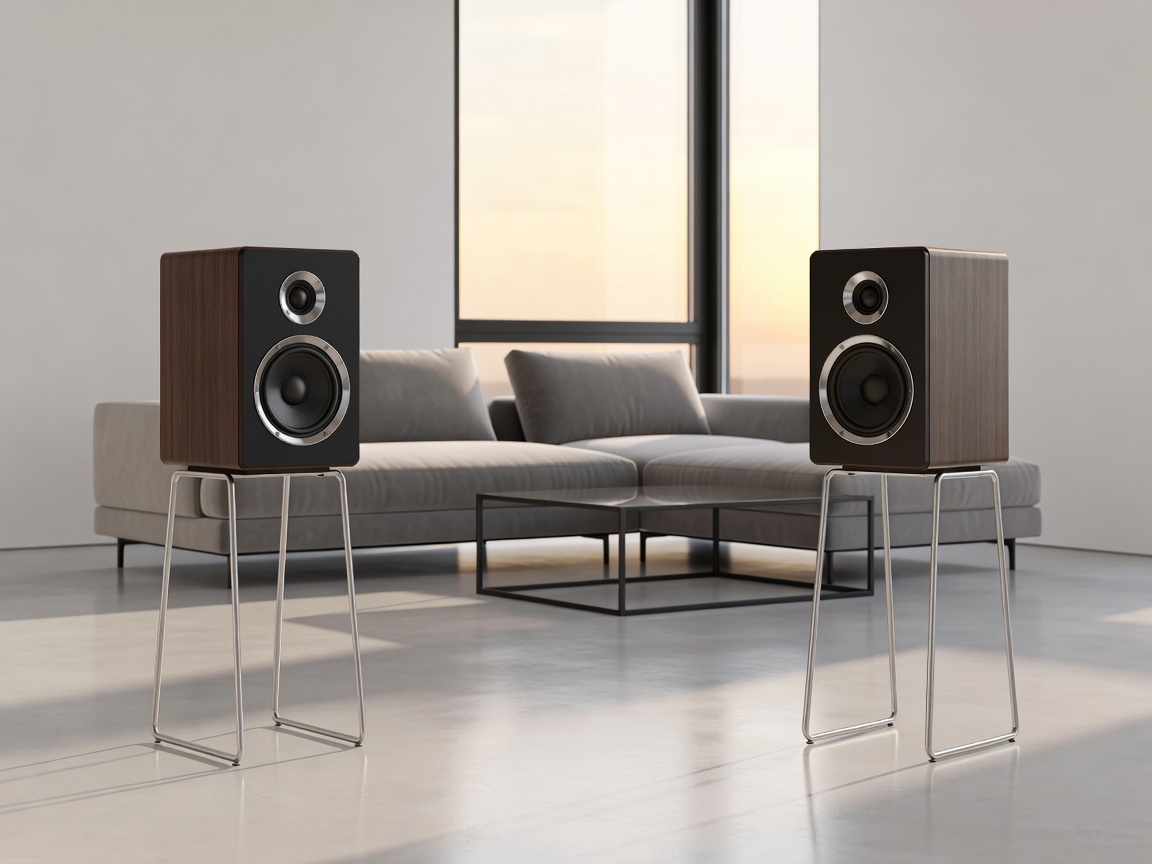
Anatomy of a Bookshelf Speaker
Most bookshelf speakers employ a two-way design. This means the frequency spectrum is divided between two drivers via an internal circuit called a crossover network.
- The Tweeter: Usually 1-inch in diameter, responsible for high frequencies (cymbals, upper vocal registers, string harmonics). Common materials include silk domes for a smooth, warm sound, or metal domes (aluminum, titanium) for crisp, revealing detail.
- The Mid-Bass Woofer: Typically ranging from 4 to 6.5 inches. This driver handles the critical midrange (vocals, guitars) down to the upper bass frequencies.
- The Crossover: An internal electrical network that dictates which frequencies are sent to which driver. A high-quality crossover ensures a seamless transition so you cannot hear where the woofer stops and the tweeter begins.
Passive vs. Active Architectures
When shopping in this category, the first major decision is choosing between passive and active (or powered) designs.
Passive speakers require an external amplifier or receiver to function. The audio source connects to the amp, which then sends the amplified electrical signal through speaker wire to the passive speaker. This modular approach allows you to upgrade your amplifier or speakers independently over time.
Active speakers contain their own internal amplification. You plug them directly into a power outlet and connect your source (via RCA, optical, or Bluetooth) straight to the speaker. This saves space and ensures the built-in amplifier is perfectly matched to the specific drivers, though it limits future upgrade paths.
Placement and Stands
Placing these speakers inside an enclosed bookshelf often results in "boomy" or muddy bass because low frequencies bounce off the surrounding wooden cavity. To get the best sound:
- Use dedicated speaker stands to bring the tweeters to ear level when seated.
- Pull the speakers at least 12 to 18 inches away from the wall behind them. This is especially critical if the speaker features a rear-firing bass port.
- Angle (or "toe-in") the speakers slightly toward the primary listening position to improve stereo imaging and high-frequency directivity.
Adding a Subwoofer
Because of their compact cabinet volume, bookshelf speakers physically cannot reproduce the lowest sub-bass frequencies (typically below 50Hz). If you listen to bass-heavy electronic music or want to use the speakers for home theater applications, pairing them with a dedicated powered subwoofer (creating a 2.1 system) is highly recommended. The subwoofer takes over the heavy lifting, allowing the bookshelf speakers to focus on the midrange and treble with even greater clarity.
Comparison: Bookshelf vs. Floorstanding
| Feature | Bookshelf Speakers | Floorstanding Speakers |
|---|---|---|
| Cabinet Size | Compact (Requires stands) | Large (Rests on floor) |
| Bass Extension | Moderate (Usually drops off at 50Hz-60Hz) | Deep (Often reaches 30Hz-40Hz) |
| Stereo Imaging | Excellent (Often "disappear" in the room) | Good, but can be impacted by large front baffles |
| Ideal Room Size | Small to Medium | Medium to Large |
Conclusion
Bookshelf speakers are incredibly versatile. Whether you are building a vinyl listening station, upgrading your desktop audio, or creating a compact home theater, a high-quality two-way bookshelf design offers pinpoint imaging and stunning clarity that larger, cheaper speakers simply cannot match. Invest in good stands, position them carefully, and you will be rewarded with a vast, engaging soundstage.