Powered Monitors: Precision and Convenience
Originally designed strictly for audio engineers in recording studios, powered monitors have rapidly become a favorite among audiophiles, gamers, and minimalists looking for a high-end desktop audio solution. By integrating amplification directly into the speaker cabinet, powered monitors offer unparalleled synergy between the amplifier and the drivers.
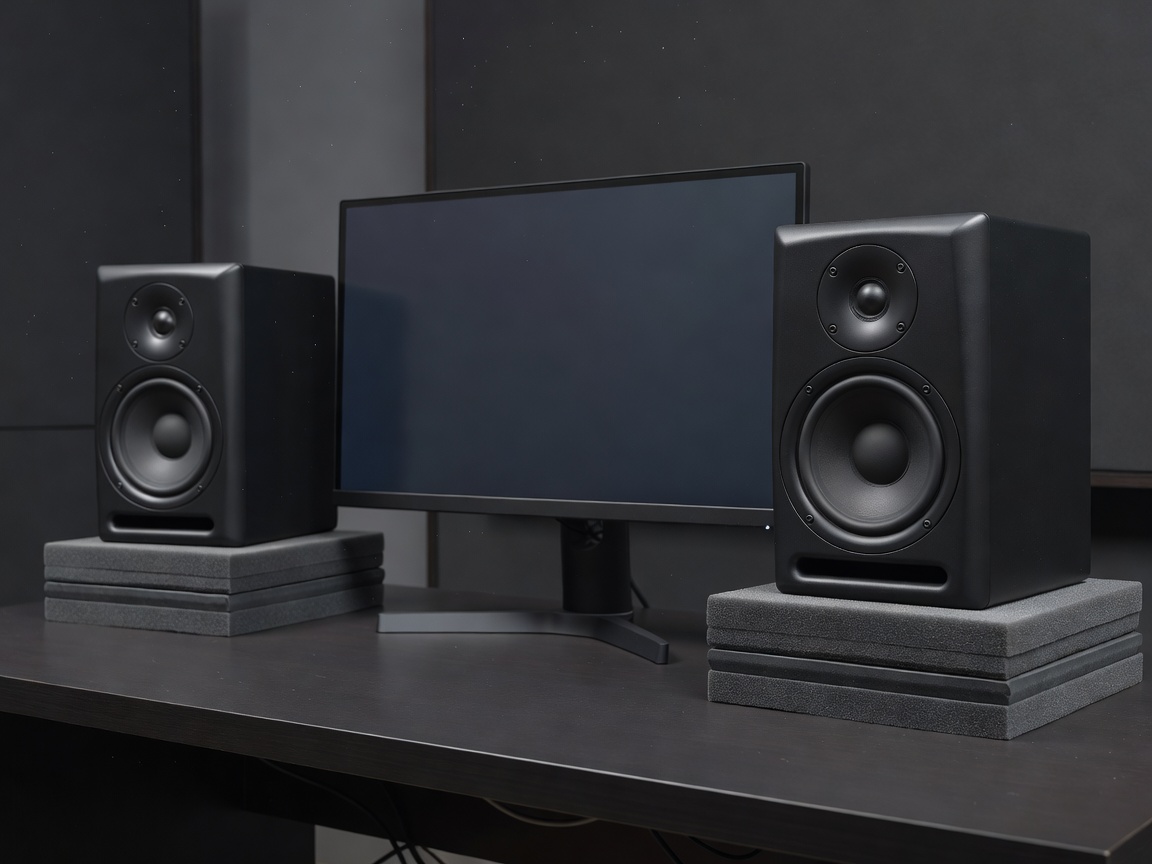
The Quest for Flat Frequency Response
The primary goal of a true studio monitor is uncolored, perfectly accurate sound reproduction. In the audio community, this is referred to as a "flat frequency response." Unlike consumer hi-fi speakers, which might artificially boost the bass for extra thump or elevate the treble to sound more "exciting," a monitor's job is to reveal the truth of a recording.
If a mix sounds harsh or muddy, a good monitor will expose those flaws immediately. While this ruthless accuracy is essential for mixing and mastering music, many casual listeners also prefer it, as it allows them to hear the music exactly as the artist and producer intended.
Active Crossovers and Bi-Amplification
One of the massive technical advantages of professional powered monitors is bi-amplification combined with an active crossover. In a standard passive speaker, a single amplifier sends a full-range signal to the speaker, where a passive crossover network splits the high and low frequencies. This passive splitting process inherently results in some signal loss and phase distortion.
In a high-quality powered monitor, the incoming audio signal is split electronically (the active crossover) before it is amplified. The speaker then uses two separate internal amplifiers: one specifically designed to power the tweeter, and another dedicated solely to the woofer. This ensures maximum efficiency, perfect phase alignment, and a dramatic reduction in intermodulation distortion.
Nearfield Listening
Most compact powered monitors are designed as "nearfield" monitors. This means they are acoustically optimized to sound best when the listener is sitting very close to them—typically between 3 to 5 feet away, such as at a computer desk or mixing console.
Nearfield listening minimizes the acoustic influence of the room. Because you are sitting so close to the sound source, the direct sound reaches your ears long before the sound reflections bouncing off the walls, floor, and ceiling. This results in surgical stereo imaging and an incredibly intimate listening experience.
Connectivity and Convenience
Modern powered monitors often bridge the gap between professional and consumer gear. While studio-focused models might only feature balanced XLR or TRS inputs, "prosumer" models often include:
- USB inputs: Featuring built-in Digital-to-Analog Converters (DACs) for direct computer connection.
- Optical/TOSLINK: Perfect for connecting to televisions or gaming consoles.
- Bluetooth: Allowing for casual wireless streaming from a smartphone or tablet.
- Subwoofer Out: A dedicated port to easily integrate an active subwoofer, complete with an automatic high-pass filter.
Are Powered Monitors Right for You?
If you primarily listen to music at a desk, desire ultimate accuracy, or want a clean, minimalist setup without a stack of external amplifiers and receivers, powered monitors are an exceptional choice. However, if you are trying to fill a massive living room with sound, or prefer a heavily colored, warm "hi-fi" sound profile, traditional passive bookshelf or floorstanding speakers might be a better fit.