Portable Bluetooth Speakers: Audio Anywhere
The portable Bluetooth speaker has revolutionized how we consume music outdoors. Through incredible advancements in battery density, digital signal processing (DSP), and material science, manufacturers can now extract surprisingly rich, room-filling sound from devices small enough to clip to a backpack or toss into a beach bag.
Defying Physics: The Passive Radiator
The primary challenge in designing a tiny speaker is bass response. As noted in our other guides, deep bass requires moving a lot of air, which traditionally dictates a large cabinet. Portable speakers solve this size constraint using an ingenious component known as a passive radiator.
A passive radiator looks like a standard speaker cone but lacks a voice coil and magnet assembly. Instead, it relies on the air pressure generated inside the sealed enclosure by the active drivers. As the active drivers push backward, they compress the internal air, pushing the passive radiator outward. This essentially allows a small enclosure to tune low frequencies much like a bass reflex port, but without the chuffing noise or the need for a deep cabinet.
Understanding IP Ratings (Water and Dust Resistance)
If a speaker is meant to go outside, it needs to survive the elements. Manufacturers measure environmental durability using the IP (Ingress Protection) standard. An IP rating consists of two numbers (e.g., IP67). The first number indicates dust protection, and the second indicates water protection. An "X" means the device was not tested for that specific metric.
- IPX4: Splash-resistant. Can handle light rain or being near a pool, but cannot be submerged.
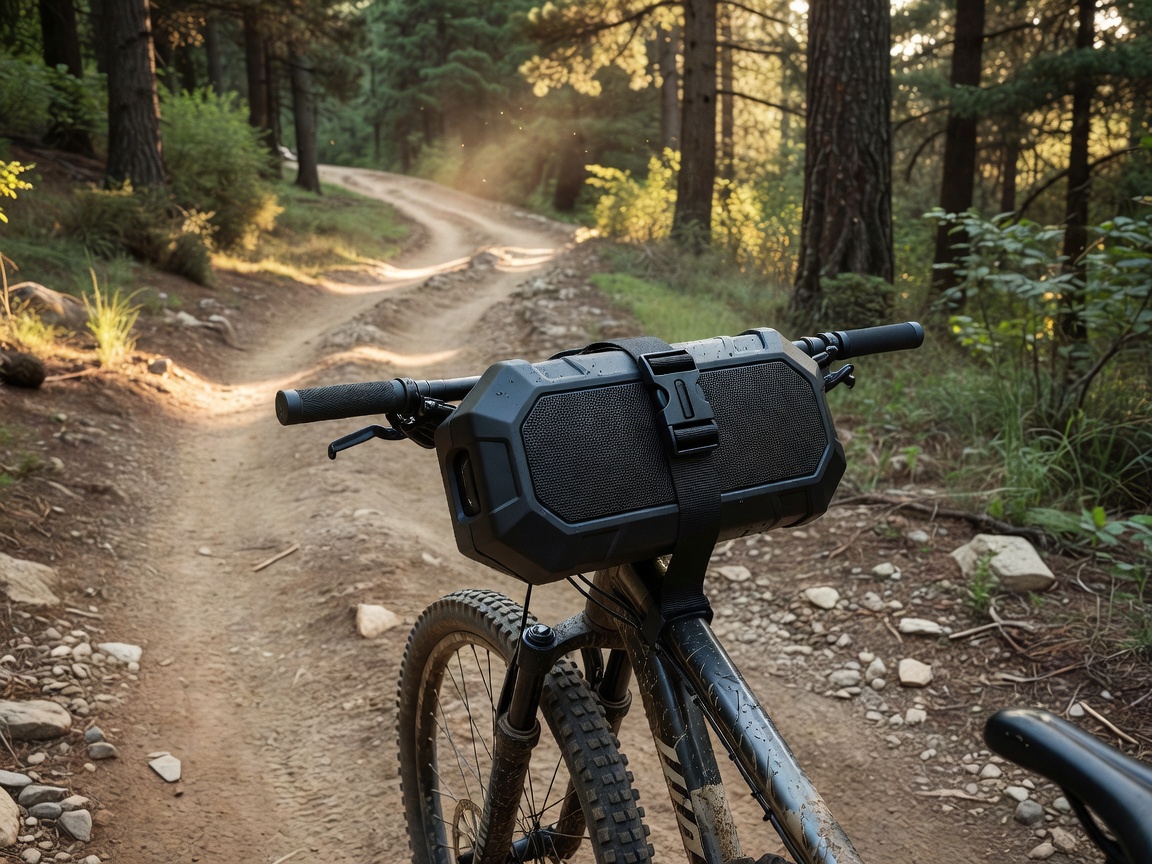
- IP67: Fully dust-tight and can survive being submerged in up to 1 meter of water for 30 minutes. Perfect for the beach or muddy trails.
- IP68: The highest standard commonly seen, capable of surviving deeper, prolonged submersion.
Battery Life and Power Delivery
Modern portable speakers utilize lithium-ion or lithium-polymer batteries. When reviewing battery claims, it is crucial to note that manufacturers generally test playtime at 50% volume. Playing heavy bass tracks at maximum volume can easily cut a 24-hour battery claim down to 5 or 6 hours.
Increasingly, these devices utilize USB-C Power Delivery (PD). Not only does this allow the speaker itself to charge rapidly, but many larger models feature reverse charging, allowing you to use the speaker's massive internal battery as a power bank to top up your smartphone.
Bluetooth Codecs Explained
While standard Bluetooth audio (SBC codec) has improved over the years, audio enthusiasts look for advanced codecs that offer higher bitrates and lower latency.
| Codec | Primary Benefit | Compatibility |
|---|---|---|
| SBC | Universal baseline standard | All Bluetooth devices |
| AAC | Highly efficient, near-CD quality | Standard on iOS, common on Android |
| aptX / aptX HD | Higher bitrates and lower latency | Many Android devices (Not supported by iOS) |
| LDAC | High-Resolution audio transmission (up to 990kbps) | Premium Android devices and audiophile players |
Conclusion
When selecting a portable speaker, weigh your priorities. If you are a hiker, prioritize a high IP rating, a carabiner clip, and lightweight design. If you want a speaker for backyard barbecues, prioritize larger drivers, long battery life, and high output volume. With the right choice, you no longer have to compromise on sound quality just because you stepped out your front door.